

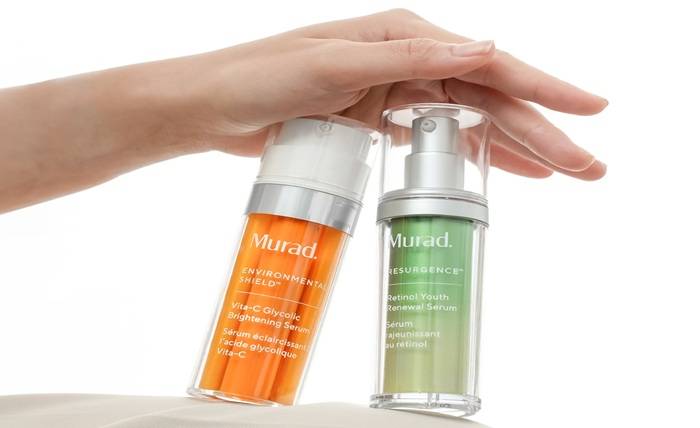
Vitamin C and retinol can be used in the same skincare routine without applying them at the same time. A straightforward approach is to use vitamin C in the morning and retinol at night, supported by moisturiser and daily sun protection.
Finding the best vitamin C serum for your routine also involves more than choosing a particular concentration. Formulation and skin tolerance matter, especially when another active ingredient, such as retinol, is part of your skincare routine.
The two ingredients work differently. Vitamin C provides antioxidant activity and can support a brighter, more even-looking complexion. Retinol is a vitamin A derivative used in cosmetic skincare to address concerns such as uneven texture and visible signs of photoageing.
Using both successfully comes down to formulation, timing and tolerance. Giving each ingredient a clear place also makes it easier to understand how your skin responds.
Vitamin C and Retinol Target the Skin in Different Ways
Vitamin C is an antioxidant that helps neutralise reactive oxygen species generated by factors including ultraviolet (UV) exposure. It is also involved in collagen synthesis and pathways associated with pigmentation. Understanding these factors can help choose the best vitamin C serum for concerns such as dullness or uneven-looking pigmentation.
Retinol works through a different pathway. It belongs to the retinoid family, which includes several vitamin A derivatives used in medical and cosmetic skincare. Retinoids affect processes involved in skin renewal and structural changes associated with photoaged skin.
Vitamin C and retinol can therefore address some overlapping concerns through different mechanisms. They do not need to be layered together to be part of the same routine.
The Best Vitamin C Serum Depends on More Than Percentage
Concentration alone does not determine how well a vitamin C serum will perform. The form of vitamin C, formulation stability, pH, packaging and ability to penetrate the skin can all influence the finished product.
L-ascorbic acid is one of the most researched forms of topical vitamin C. It can also be challenging to formulate because stability and skin delivery affect its performance. Vitamin C derivatives are also used in skincare, with different formulations designed to address factors such as stability and tolerability.
A higher percentage should not automatically be treated as evidence of a better serum. Concentration is one consideration within the complete formulation, and a product that repeatedly irritates your skin may be difficult to use consistently.
Storage can also affect vitamin C formulations. Follow the manufacturer’s instructions and pay attention to substantial changes in colour, smell or texture.
If retinol is also part of your plans, establish that your skin comfortably tolerates the vitamin C product before changing other treatment steps. This creates a useful baseline for introducing the second active.
Use Vitamin C in the Morning and Retinol at Night
Separating vitamin C and retinol by time of day is a practical way to include both. Vitamin C can form part of the morning routine, with retinol reserved for the evening.
A simple morning routine is:
- Gentle cleanser
- Vitamin C serum
- Moisturiser
- Broad-spectrum sunscreen
Vitamin C’s antioxidant properties complement daytime skincare, but the ingredient does not replace direct UV protection.
An evening routine can remain equally straightforward:
- Gentle cleanser
- Retinol product
- Moisturiser
Retinoids can cause dryness, redness, scaling and irritation, particularly when first introduced. Follow the directions for the specific retinol product rather than assuming every formula should be applied at the same frequency.
Change one treatment variable at a time. If vitamin C is already part of your morning routine, keep it unchanged when introducing retinol at night. If irritation then appears, there are fewer new variables to investigate.
There is no universal requirement to layer vitamin C and retinol in the same application. Separating them gives each ingredient a straightforward position in the routine without creating an unnecessarily complicated sequence of active products.
Manage Irritation Without Applying Blanket Ingredient Rules
Dryness, persistent redness, stinging or significant flaking can indicate that the routine needs adjusting. Start by reviewing how frequently products are being used and which treatments are being combined.
Exfoliating acids, retinol and other active ingredients are not automatically incompatible. Formulation, concentration, frequency, and individual tolerance affect how products interact. Some skincare products are intentionally formulated with more than one active ingredient.
Problems are harder to identify when several potentially irritating products are introduced simultaneously. If irritation occurs, simplifying the routine can help identify which product or combination may be contributing.
Moisturiser can help manage dryness associated with retinoid use. Reducing the frequency of retinol may also be appropriate if your skin becomes uncomfortable, depending on the product’s directions.
Persistent burning, marked redness, swelling or significant peeling warrants stopping the product and seeking appropriate professional advice rather than increasing application frequency.
The practical rule is to follow the instructions for the specific formulations you use rather than relying on broad claims that two ingredients should never appear in the same routine.
Support the Routine With Appropriate Sun Protection
Sun protection remains necessary when vitamin C and retinol are part of a routine. Vitamin C provides antioxidant activity, but it is not a substitute for sunscreen.
Cancer Council Australia recommends SPF50 or SPF50+, broad-spectrum, water-resistant sunscreen when the UV Index reaches 3 or above. Sunscreen should be combined with protective clothing, a broad-brimmed hat, shade and sunglasses.
This is particularly relevant when uneven pigmentation or photoageing is one of the reasons for using vitamin C or retinol. Reducing further UV exposure supports a routine aimed at addressing concerns related to prior exposure.
Apply sunscreen according to its label directions rather than relying on antioxidant skincare for UV protection.
Conclusion
Vitamin C and retinol can be combined in a routine without unnecessarily complicating skincare. The priority is to choose suitable formulations, follow their directions, and adjust use based on how your skin responds.
Finding the best vitamin C serum is one part of that process. Consistent use, appropriate moisturisation and reliable sun protection also influence how manageable the overall routine is.
If persistent irritation develops, or if you have a skin condition that may affect your response to active skincare, seek individual advice from a suitably qualified health professional.