

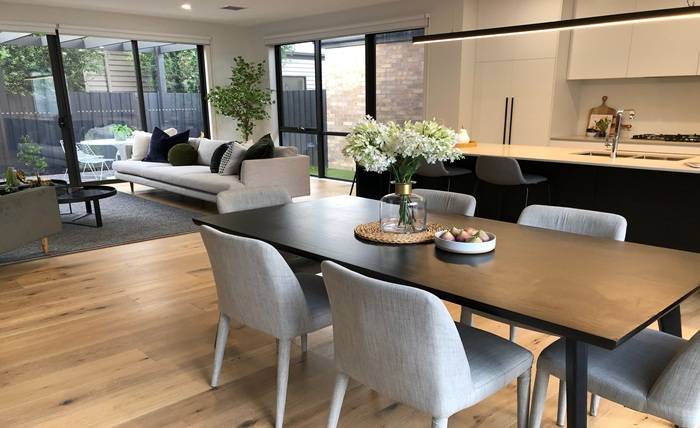
Property styling prepares a home for sale by making its layout, scale, and intended use easier for buyers to understand. Carefully selected furniture, artwork, lighting and accessories can define rooms, improve visual flow and draw attention to genuine architectural features.
The best property styling Melbourne approach should respond to the individual property, including its room dimensions, architectural character and likely buyer market. A compact apartment, a narrow terrace, and a detached family home require different decisions about furniture scale and how spaces are defined.
Styling works alongside cleaning, decluttering and maintenance. Its purpose is to make the existing property easier to interpret without disguising defects or creating an inaccurate impression of its condition.
Property Styling Makes Room Size and Function Easier to Read
Furniture gives buyers useful reference points for understanding room size and function, particularly when a property is vacant.
An unfurnished second bedroom, for example, may leave buyers wondering whether it can accommodate a queen bed, bedside table and storage. Appropriate furniture demonstrates one realistic use of the available floor area.
The same principle applies to living and dining rooms. Pieces proportioned to the room can establish pathways and show how different areas relate to one another. Professional property styling Melbourne can involve selecting and positioning furniture and accessories to suit these characteristics.
The appropriate approach changes with the property. A narrow terrace may require shallower furniture to preserve movement through connected rooms. A compact apartment can benefit from fewer freestanding pieces, leaving more floor area visible. Larger open-plan homes may need furniture groupings to distinguish living and dining zones.
These choices give buyers practical information about how the home’s available space can function.
Styling Can Give Flexible Spaces a Clear Purpose
Not every area has an immediately obvious function. Styling can demonstrate a credible use of these spaces and make the floor plan more understandable.
A small alcove may work as a study nook once it contains a compact desk and chair. An additional room could be presented as a home office or guest bedroom if its dimensions support that use. Outdoors, appropriately scaled seating can demonstrate how a balcony or courtyard might function without overcrowding it.
The key is accurate representation. Furniture should show what fits comfortably rather than suggest that an area can accommodate more than it realistically can.
This distinction also separates a styling problem from a property-condition problem. An empty room, an undefined nook or confusing layout may benefit from carefully positioned furniture. Damaged finishes and maintenance defects require attention in their own right.
Consumer Affairs Victoria states that sellers and agents must not knowingly conceal material facts from prospective buyers. Styling should therefore clarify what the property offers rather than compensate for issues that need maintenance or disclosure.
Styling Can Make Property Photography Easier to Interpret
Listing photographs often provide a buyer’s first detailed look at a home, so each image needs to clearly communicate the room’s function and layout.
An empty open-plan area may show the available floor space without explaining how dining and living zones relate. A dining setting, sofa and rug can provide that context without physically altering the room.
Furniture also needs to work from the camera’s viewpoint. An arrangement that functions well in daily life does not automatically photograph clearly. A large chair near a doorway, for example, may dominate the foreground of an image and obscure the room behind it.
Preparing for photography can involve:
- removing furniture that blocks important sightlines
- clearing cluttered surfaces
- moving pieces away from windows where necessary
- keeping pathways visible
- positioning furniture to define open-plan zones.
The goal is to make the home’s layout understandable from the photographs. Consumer Affairs Victoria also requires property advertising to avoid false or misleading representations, so photography and styling should not distort the property’s size, features or condition.
Styling Should Support the Home’s Genuine Features
Furniture should help buyers notice the property itself rather than compete with its architecture.
In a Melbourne terrace with an original fireplace, seating can be arranged so the feature remains visible without narrowing the main route through the room. In a contemporary home with large windows, lower-profile pieces can preserve views towards a garden or outdoor area.
Permanent finishes also influence styling decisions. Flooring, cabinetry, wall colours and architectural details already establish much of a home’s visual character. Furniture and accessories can work with those elements instead of introducing an unrelated decorative theme.
This is why the best property styling Melbourne approach cannot rely on the same arrangement for every home. Room dimensions, existing finishes and architectural features determine what needs emphasis and how much furniture a space can comfortably accommodate.
The result should make the home’s proportions, features and functional relationships easier to recognise.
Decluttering and Maintenance Should Come Before Styling
Styling works more effectively once unnecessary belongings and visible maintenance issues have been addressed.
Start with areas where everyday possessions make the space difficult to read, including kitchen benches, bathroom vanities, bedside tables and open shelving. Furniture should also be assessed. Pieces that are useful for everyday life may still restrict movement or conceal usable floor area during a sales campaign.
A practical preparation sequence is:
- Declutter: Store excess belongings and reduce highly personal displays.
- Edit furniture: Remove pieces that dominate rooms or interrupt movement.
- Address maintenance: Attend to visible issues, such as damaged handles, failed light bulbs, and marked walls, where appropriate.
- Clean thoroughly: Focus on windows, flooring, kitchens and bathrooms.
- Style the space: Position suitable furniture and accessories once the room has been simplified.
Consumer Affairs Victoria recommends keeping a property clean and tidy when preparing it for sale. Completing these tasks before styling gives the presentation a clean foundation and prevents decorative changes from being used where practical maintenance is required.
Property Styling Should Be Planned Around the Sales Campaign
Styling is easier to manage when it is coordinated with photography, marketing and inspections.
Start with the photography date and campaign launch, then work backwards to allow time for decluttering, cleaning, maintenance and furniture installation. This reduces the need to make rushed presentation decisions immediately before photographs are taken.
The amount of styling required depends on what is already in the home. A vacant property may require furniture across its main rooms. An occupied property may already contain suitable pieces, with selected items removed, repositioned or supplemented.
Once inspections begin, the presentation established for photography should be maintained. Daily clutter can be cleared, beds made, and furniture returned to its intended position before buyers arrive.
This creates continuity between the home shown in the marketing campaign and the property buyer’s experience during an inspection.
Conclusion
Property styling can prepare a Melbourne home for sale by making its scale, function and genuine features easier to understand. It can define flexible spaces, support clearer photography and demonstrate realistic furniture layouts.
The best property styling Melbourne approach responds to the individual home and involves practical preparation, such as decluttering, cleaning, and maintenance. When styling is coordinated with the sales campaign, it helps buyers understand what the property offers and how its spaces can be used in practice.